
What Is the DLOSCE? The 2027 Guide for Dental Students

The DLOSCE is the Dental Licensure Objective Structured Clinical Examination. Recently, the standalone version of the DLOSCE has been discontinued and instead has been integrated directly into the broader American Board of Dental Examiners (ADEX) Dental Examination series, also replacing ADEX’s previous Diagnostic Skills Examination Objective Structured Clinical Examination (DSE OSCE). With this transition, it has enhanced licensure portability while also modernizing approaches to evaluating the clinical competence of candidates.
Taking the DLOSCE as part of the ADEX Dental Examination series can now be used to fulfill the clinical assessment requirement for dental licensure in most U.S. jurisdictions. This guide will cover everything you need to know about the DLOSCE, including its exam format, content breakdown, scoring system, eligibility, costs, and our newest DLOSCE study tool. Keep reading!
Exam Purpose, Format & Scoring
What Is the DLOSCE?
The Dental Licensure Objective Structured Clinical Examination (DLOSCE) is a computer-based dental licensure exam, used to evaluate clinical judgment and diagnostic skills in practicing dentistry. As mentioned earlier, the DLOSCE exam is now part of the ADEX Dental Examination series. While the Joint Commission on National Dental Examinations (JCNDE) oversees the DLOSCE, ADEX is responsible for administering the exam under an exclusive license from ADA. The ADEX Dental Examination series consists of both computer-based and clinical exam components; the DLOSCE constitutes the computer-based component of the series.
What Is the DLOSCE Exam Format?
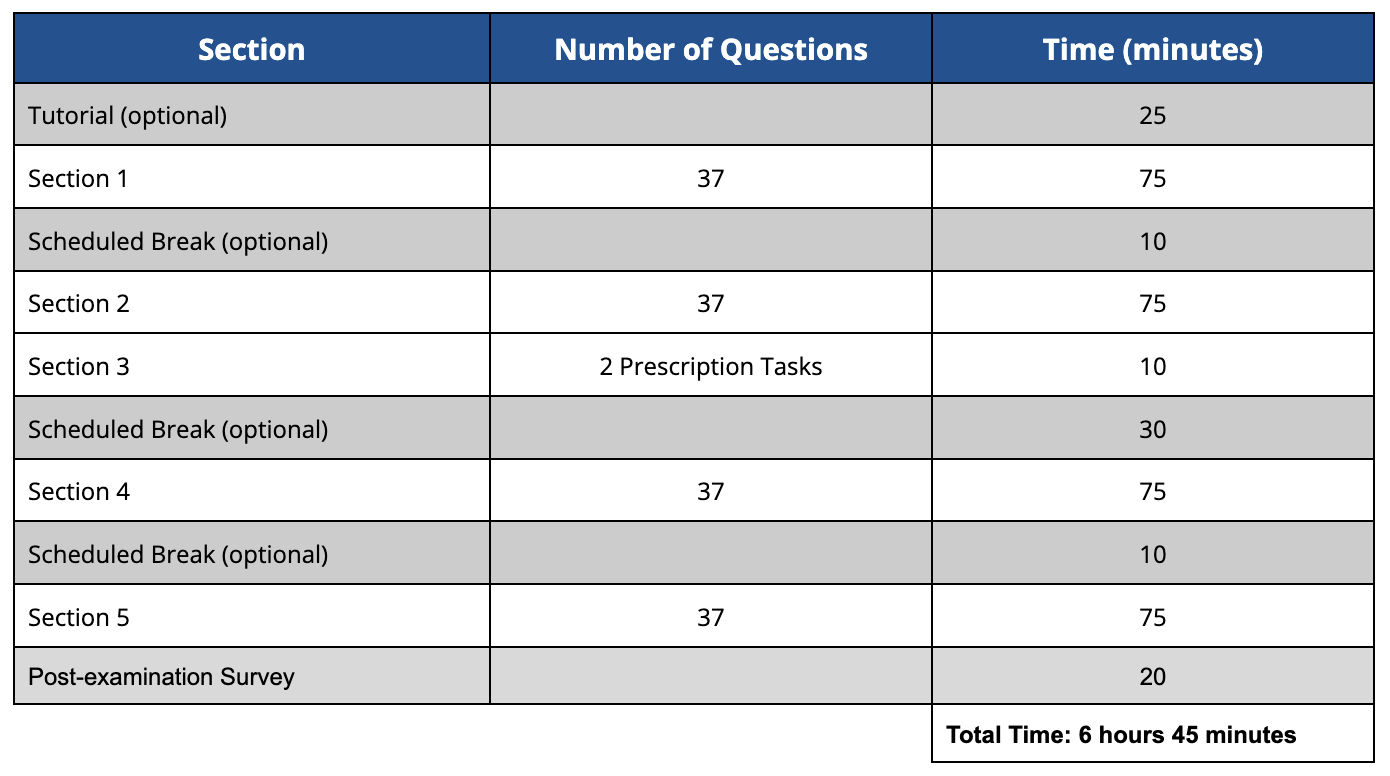
Now knowing what is DLOSCE, how about the exam format? The DLOSCE is a computer-based exam with a total administration time of 6 hours and 45 minutes. Composed of 5 sections, with three optional breaks in between, you have to answer a total of 148 multiple-choice questions and complete two prescription tasks.
The exam consists primarily of multiple-choice questions, which may be one of two types:
- Single Correct Answer: Candidates must select only one answer and only one answer is correct.
- One or More Correct Answers: Candidates can select one or more answers. For these questions, one or more answers may be correct and others incorrect and/or neutral.
For the two prescription tasks, candidates will be required to review a patient box that provides information about the patient who will be receiving the prescription. The main goal is to prescribe the appropriate medication for the patient described in the patient box.
What Does the DLOSCE Test?
The DLOSCE assesses candidates’ clinical judgment skills on a wide range of topics involving diverse patient backgrounds. Specifically, the DLOSCE features questions involving interactive 3D dental models and clinical images in the form of clinical photographs or radiographs.
DLOSCE Content Breakdown
While the DLOSCE covers a wide range of core clinical disciplines, some areas are weighted much more heavily than others. As such, the DLOSCE will cover the following topics:
- Restorative (24%): Diagnosis, preparations, direct & indirect restorations.
- Prosthodontics (19%): Removable, fixed, implants.
- Oral Pathology, Pain Management, and Temporomandibular Dysfunction (13%): Oral pathology/medicine, orofacial pain, temporomandibular dysfunction.
- Periodontics (10%): Diagnosis, treatment planning, etiology.
- Oral Surgery (9%): Diagnosis, treatment planning, extractions.
- Endodontics (8%): Diagnosis, treatment planning, emergency management, post-treatment evaluation.
- Orthodontics (6%): Treatment screening, space management.
- Medical Emergencies (6%): Diagnosis, management.
- Prescriptions (5%): Antibiotic, analgesic.
How Is the DLOSCE Scored?
The DLOSCE is scored using a scaled score system that ranges from 49 to 99. Importantly, examination results are reported as either “pass” or “fail”, which is based on the candidate’s overall scale score and not on subarea scales. Keep in mind, scale scores don’t equate to the number of questions you answered correctly. Additionally, some questions may appear on the DLOSCE for experimental purposes to determine its usage in future tests and are not scored.
In general, each multiple-choice question is worth one point. However, for multiple-answer multiple-choice questions, you may receive partial credits for a question if selecting some of the correct answers and not selecting any wrong answers. Be cautious here though, as you will automatically receive no credit if you’ve selected any wrong options–even if you’ve selected some correct answers! Additionally, questions may contain neutral options. While you will not earn any credits for selecting neutral responses, you won’t lose any as well. Lastly, each prescription task is worth four points, and receiving partial credit for these questions are possible as well.
What Is the Passing Score for the DLOSCE?
Now, you may be most curious about the passing score for the DLOSCE. With the scale scores ranging from 49 to 99, a score of 75 is the minimum passing score. Again, these scaled scores are not raw scores; hence, a score of 74 does not mean you would have passed with one more question correct. Rest assured, Booster Prep will offer a Pass Guarantee for our DLOSCE resource memberships. To learn more about the DLOSCE pass rate, click here (Add link to “DLOSCE Pass Rate”).
Comparing with the INBDE
DLOSCE vs. INBDE: What’s the Difference?
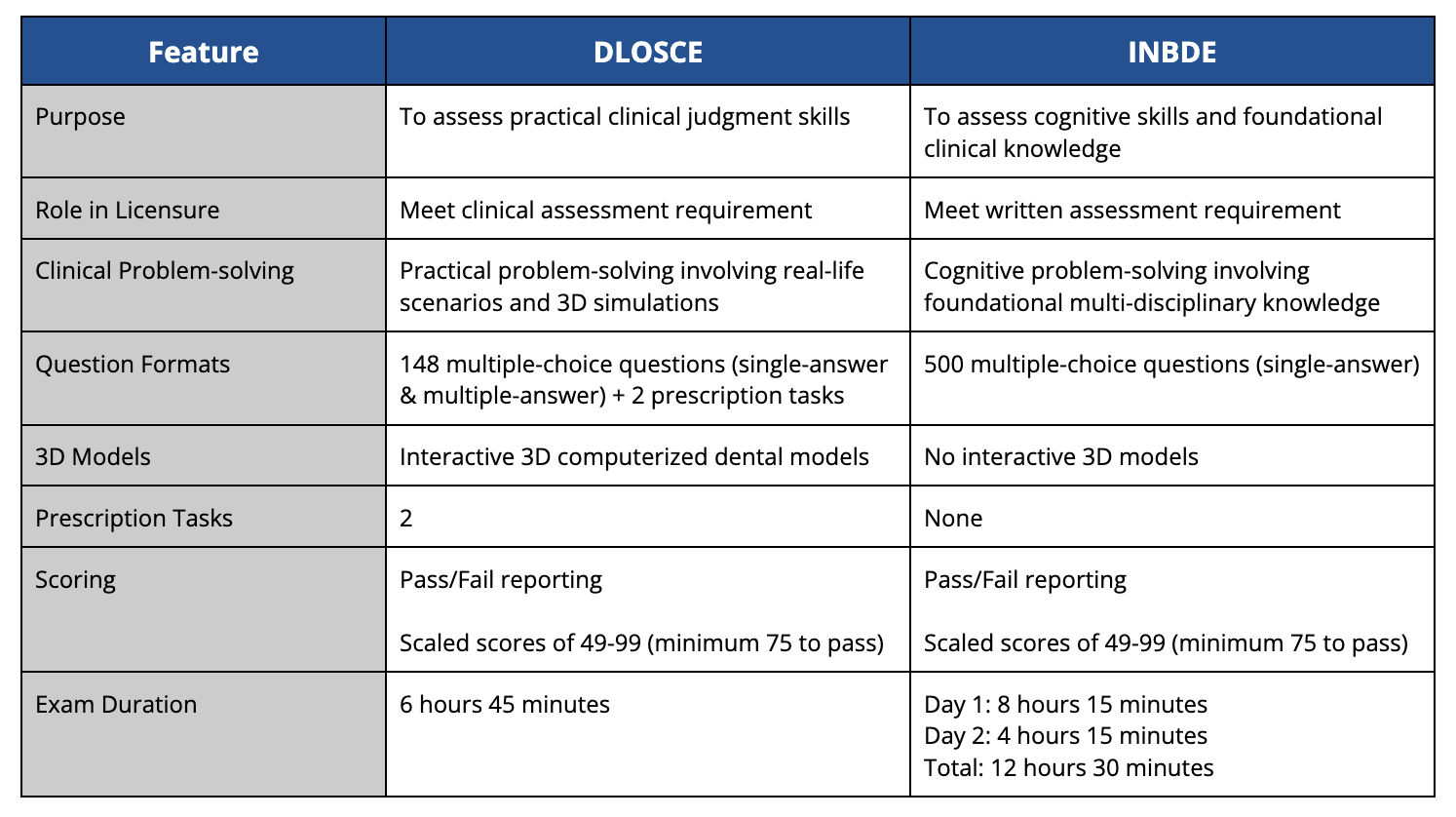
While both the DLOSCE and Integrated National Board Dental Examination (INBDE) are dental board exams that take part in obtaining dental licensure, they do have key differences such as their purpose and exam logistics. At Booster Prep, we also have a dedicated resource for the INBDE with a Pass Guarantee! Let’s take a look at the difference between these two exams in the table below:
Who Is Eligible to Take the DLOSCE?
Current students or graduates of a U.S. or Canadian DDS or DMD program accredited by the Commission on Dental Accreditation (CODA) or Commission on Dental Accreditation of Canada (CDAC) are eligible to take the DLOSCE. Current students will need to present authorization from their school representative to be eligible, while graduates will just need to submit their diploma or official transcript.
Graduates from non-CODA accredited dental programs are also eligible to take the DLOSCE by meeting one of the following conditions: enrolled in a CODA-accredited DDS/DMD Advanced Standing program, current resident in their final academic year of a CODA-accredited dental 2-year GPR or AEGD residency program, former resident who has completed a CODA-accredited dental 2-year GPR or AEGD residency program, enrolled in/completed a CODA-accredited dental specialty certificate program, or enrolled in/completed a CODA-accredited postdoctoral or residency program. Depending on which category you fall into, you will need to submit documents such as a diploma, official transcript, authorization from your designated school, or a state board authorization letter.
Exam Eligibility, Costs & Duration
Where Is the DLOSCE Accepted?
When the DLOSCE was administered as a standalone, only 8 states accepted the DLOSCE. Now, as DLOSCE is part of the ADEX Examination series, it is approved by 48 states and other jurisdictions, including Washington, D.C., Puerto Rico, Jamaica, and the U.S. Virgin Islands.
How Much Does the DLOSCE Cost?
The ADEX Dental Examination series, which includes the computer-based DLOSCE exam and the clinical Periodontal, Endodontic, Prosthodontic, Anterior Restorative, and Posterior Restorative exam components, costs a total of $2995 USD plus a Facility Fee, which may vary by clinical location. While this fee includes one free retake for each clinical exam component, to reattempt the DLOSCE, you will have to pay an additional $695 USD fee.
How Long Is the DLOSCE?
The DLOSCE is composed of 5 sections with optional breaks in between. The table below summarizes the format of the DLOSCE.
DLOSCE Preparation
How to Prepare for the DLOSCE
So far, we’ve covered the logistics of the DLOSCE, but how do you study for the DLOSCE? To highlight some of our tips for best performance:
1. Understand the DLOSCE Content Areas: Your first step is to know that the DLOSCE tests you on 9 different content subareas. As some sections are weighted more heavily than others, understand the weighting of each subarea and allocate your study time accordingly. Booster Prep’s DLOSCE platform will contain a custom study schedule builder, which will help you create a study plan that works around your schedule and ensure you are on top of covering all DLOSCE content areas!
2. Familiarize Yourself With DLOSCE Question Formats: It could save you a tremendous amount of stress just by familiarizing yourself with question formats and knowing what to expect. Familiarize yourself with the different types of questions you may encounter: prescription tasks and what patient boxes look like, single-response multiple-choice questions, and multiple-response multiple-choice questions. Booster Prep’s DLOSCE platform will contain over a thousand practice questions that resemble the real DLOSCE. Not only will these questions mimic the exam interface of the actual DLOSCE, there will also be detailed solutions for each question, helping you feel fully prepared and confident for your exam! Additionally, it may be helpful to review commonly used acronyms and abbreviations that may appear on the DLOSCE.
3. Practice With the Official DLOSCE Questions: Be aware of what kind of questions you will likely encounter on the exam by completing official DLOSCE practice questions. Bear in mind, these practice questions are more to help candidates familiarize themselves with question formats as opposed to using the content for studying. To help you study for the content, Booster Prep’s DLOSCE resource will contain cheat sheets, videos covering high-yield concepts, and detailed solutions for each practice question. Additionally, your clinical experience, textbooks, and lecture notes are reliable sources for studying as well.
4. Practice Using the 3D Model Interface: The DLOSCE features interactive 3D dental models to answer questions on the exam. Visit ADEX’s online sample tutorial for practice purposes, and get comfortable viewing and manipulating a three-dimensional sample model–it can be magnified, moved, and rotated! Use instructions outlined in the help section represented by a question mark in the screen’s upper right hand corner to interact with the model. Keep in mind, the 3D sample model interface is not compatible with mobile devices. Stay tuned, as you will also be able to practice with clinical 3D models on our DLOSCE platform soon!
5. Focus on Applying Clinical Knowledge: Ultimately, DLOSCE is an exam specifically to test your clinical judgment skills and uses real-life scenarios involving a diverse range of patient types. Hence, it’s very important that you are up-to-date with current clinical guidelines!
Transition to ADEX
What Does the DLOSCE-ADEX Transition Mean for 2027 Candidates?
Historically, the DLOSCE was a standalone computer-based clinical exam. As of August 2026, the standalone version of the DLOSCE has been discontinued and has transitioned into the ADEX Dental Examination series, replacing ADEX’s DSE OSCE. This can mean many things for 2027 candidates. First, candidates don’t have the option to take the standalone version of the DLOSCE; instead, only available as part of the ADEX Dental Examination series (i.e., in conjunction with the clinical components of the series). With this new agreement, it also simplifies licensure pathways for candidates, as candidates just have to sign up through one application portal (i.e., ADEX) as opposed to scheduling exams separately. Lastly, this transition has enhanced licensure portability, allowing candidates to practice in 48 states and other jurisdictions.
Despite many benefits of taking the DLOSCE with the new DLOSCE-ADEX transition, the DLOSCE remains a challenging exam that requires extensive preparation. The DLOSCE tests a wide range of clinical concepts and requires you to apply them to many different scenarios and patient backgrounds. Additionally, the format of the DLOSCE can seem stressful as well, with some questions containing more than one correct answer, making it harder for candidates to obtain full marks. The good news is, now Booster Prep is here to help you ace your DLOSCE with a Pass Guarantee! From building your study schedule to providing DLOSCE-specific cheat sheets and questions that mimic the real DLOSCE, our upcoming DLOSCE platform will help you at each step of your journey preparing for your DLOSCE.
FAQ
Q: How many questions are on the DLOSCE?
A: 148 multiple-choice questions and 2 prescription tasks.
Q: Can you retake the DLOSCE if you fail?
A: Yes, you can retake the DLOSCE as long as you wait a minimum of ten days between attempts. However, after three successive failed attempts of the DLOSCE, you will have to wait a minimum of six months to reattempt the DLOSCE as part of a new series.
Q: How long does it take to get DLOSCE results?
A: Generally 2 to 3 business days, but may take up to 15 business days.
Q: What should I bring to the DLOSCE
A: One primary (e.g., driver’s license, passport) and one secondary (e.g., debit cards, credit cards) physical form of identification (ID). Primary ID must be government-issued with your photograph. Both forms of ID must contain your name and signature.